
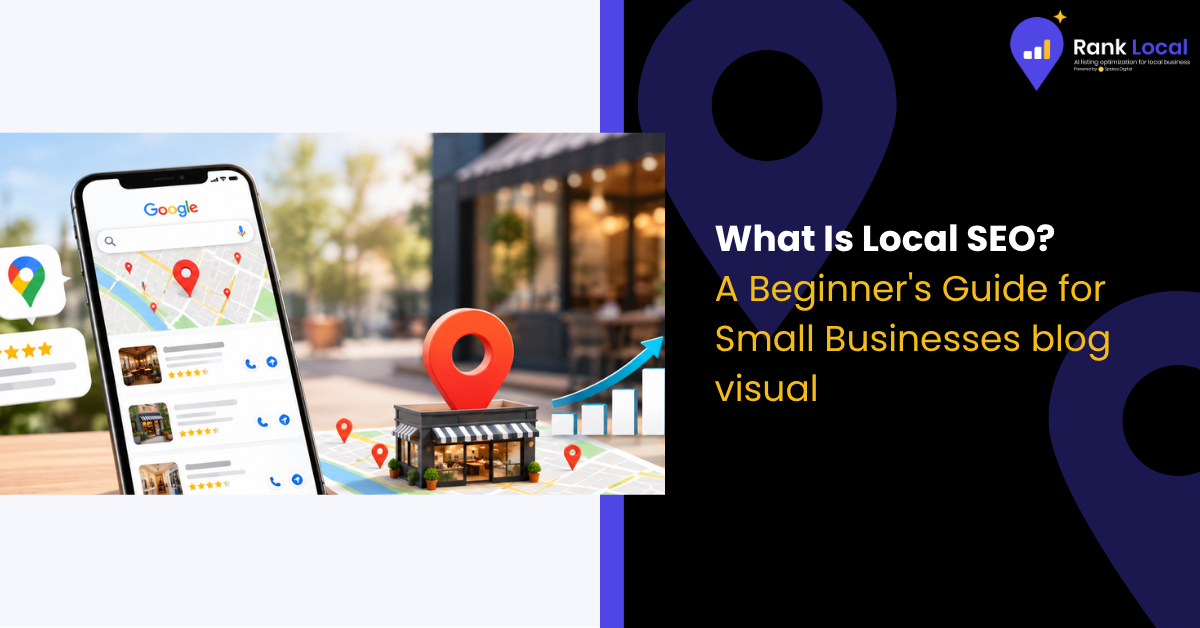
Picture this: it's 6 p.m., you're hungry, and you pull out your phone and type "pizza near me." Within seconds, you see a map, three nearby restaurants, their star ratings, and a button to call. You tap one. Dinner is decided.
That tiny moment is worth millions of dollars to local businesses every day. And the businesses at the top of that list? They didn't get there by luck. They got there with local SEO.
If you own a small business and want more customers walking through your door or calling your phone, this guide is for you. Let's break down what local SEO is, why it matters, and how you can start improving your visibility today.
What Is Local SEO?
Local SEO (local search engine optimization) is the process of improving your business's visibility in search results for people searching in your area. It helps your business appear when potential customers look for products or services "near me" or in a specific city, neighborhood, or ZIP code.
While traditional SEO focuses on ranking a website nationally or globally, local SEO focuses on geography. A plumber in Dallas doesn't need to rank for "plumbing tips" across the country. They need to rank for "emergency plumber in Dallas" when a pipe bursts at midnight.
Local SEO influences where you show up in three main places:
- The Local Pack: The map and top three business listings that appear above regular search results.
- Google Maps: Where customers search for directions, hours, and reviews.
- Organic local results: Standard search listings tailored to the searcher's location.
Why Local SEO Matters for Small Businesses
Here's the reality: today's customers search online first, then buy. Local intent is huge, and it's growing.
- Nearly half of all Google searches have local intent, according to widely cited industry research.
- Most consumers use search to find local businesses, often making a decision the same day.
- Mobile users searching for something nearby frequently visit a store or make contact within 24 hours.
For small businesses, this is a golden opportunity. You may not have the advertising budget of a national chain, but you do have something they don't: local relevance. Local SEO levels the playing field by rewarding proximity, reputation, and relevance, not just big budgets.
Better yet, local searchers are ready to act. Someone searching "dentist open Saturday near me" isn't browsing. They're looking to book. That means local SEO often delivers higher-quality leads than almost any other marketing channel.
How Local SEO Works: The 3 Ranking Factors
Google uses three main factors to decide which local businesses to show:
1. Relevance
How well does your business match what the searcher wants? A complete, accurate profile with the right categories, services, and keywords helps Google understand exactly what you offer.
2. Distance
How close is your business to the person searching? You can't change your address, but you can make sure your location information is accurate everywhere online.
3. Prominence
How well known and trusted is your business? Reviews, mentions across the web, links, and overall online presence all play a role.
The good news? You can influence relevance and prominence directly. Let's look at how.
7 Local SEO Strategies You Can Start Today
1. Claim and Optimize Your Google Business Profile
Your Google Business Profile (formerly Google My Business) is the single most important local SEO asset you own. It's free, and it powers your listing in Google Search and Maps. To optimize it:
- Claim and verify your listing.
- Choose the most accurate primary category.
- Add your hours, phone number, website, and service areas.
- Upload high-quality photos of your storefront, team, and work.
- Write a keyword-rich, helpful business description.
- Post updates, offers, and events regularly.
Profiles that are complete and active are far more likely to earn clicks and calls.
2. Keep Your NAP Consistent
NAP stands for Name, Address, and Phone number. These details should be identical everywhere your business appears online: your website, social profiles, directories, and review sites. Even small differences (like "Street" vs. "St.") can confuse search engines and weaken your rankings.
3. Build Local Citations
A citation is any online mention of your business's NAP. Listings on Yelp, Apple Maps, Bing Places, Yellow Pages, and industry-specific directories all count. The more accurate citations you have, the more trust you build with search engines.
4. Earn and Respond to Customer Reviews
Reviews are a major trust signal for both Google and customers. Ask happy customers to leave feedback right after a great experience. Make it easy by sending a direct review link by text or email.
Just as important: respond to every review, good or bad. A polite, professional reply to a negative review shows future customers that you care.
5. Optimize Your Website for Local Search
Your website should reinforce your local relevance. Here's how:
- Include your city and service area in title tags, headings, and content.
- Create dedicated pages for each location or major service.
- Embed a Google Map and display your NAP on every page.
- Make sure your site is mobile-friendly and loads fast.
- Add local business schema markup to help search engines understand your details.
6. Create Locally Focused Content
Blog posts about local events, community news, neighborhood guides, or customer success stories show Google (and people) that you're truly part of your community. A bakery might write "Best Wedding Cake Trends in Austin," while an HVAC company could share "How to Prepare Your Home for a Florida Summer."
7. Build Local Links and Partnerships
Links from other local websites are a strong prominence signal. Sponsor a youth sports team, join your chamber of commerce, partner with neighboring businesses, or contribute to local news outlets. Each quality link tells search engines your business is trusted in the community.
Common Local SEO Mistakes to Avoid
Even well-meaning business owners trip up on the basics. Watch out for these:
- Inconsistent business information across directories.
- Ignoring reviews, especially negative ones.
- Keyword stuffing your business name or description.
- Duplicate listings that split your authority.
- Neglecting mobile users, who make up the majority of local searches.
How Long Does Local SEO Take to Work?
Local SEO is a marketing strategy, not a quick fix. Many businesses notice early improvements, such as more profile views and calls, within a few weeks of optimizing their Google Business Profile. Stronger, more competitive rankings typically take three to six months of consistent effort. The payoff, however, compounds over time, and unlike paid ads, you're not paying for every click.
Final Thoughts
Local SEO isn't just for tech-savvy marketers. It's a practical, affordable way for small businesses to get found by customers who are already searching for what you offer. Start with the fundamentals: claim your Google Business Profile, keep your information consistent, collect reviews, and create content that speaks to your community.
Of course, doing it all yourself while running a business can feel overwhelming. That's where we come in.